
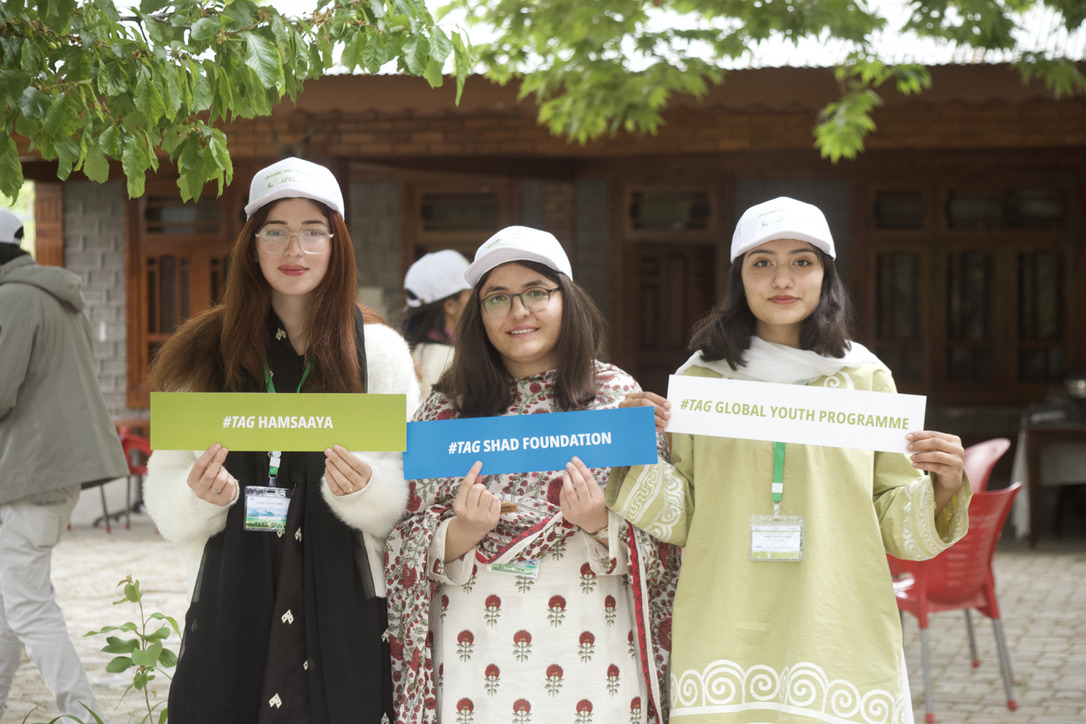
Global Youth Program
Good Neighbors · Implemented with SHAD Foundation
Highlights
- ✓160 applications received, 50 participants selected across two age bands
- ✓Three-day residential youth camp in Chitral attended by 47 young women
- ✓Youth Development Network established with a democratically elected cabinet
- ✓Seven skills institutions mapped across Upper and Lower Chitral
District Chitral has a large and growing youth population and very little built for it. Limited access to quality education and healthcare, rising mental health concerns, unemployment, and the mounting effects of climate change press hardest on young women, whose educational and professional plans are often the first thing economic hardship takes away.
The Global Youth Program is Good Neighbors’s response: a structured platform that treats young people as participants rather than beneficiaries. Hamsaaya delivered the mid-year phase alongside implementing partner SHAD Foundation, working with the district administration, local civil society organisations and community leaders to get the program on the ground.
Registration opened against a published set of criteria covering gender, age, geography and willingness to take part. 160 young people applied. Fifty were selected — fifteen aged 15 to 18 and thirty-five aged 19 to 28 — meeting the program’s engagement target in full.
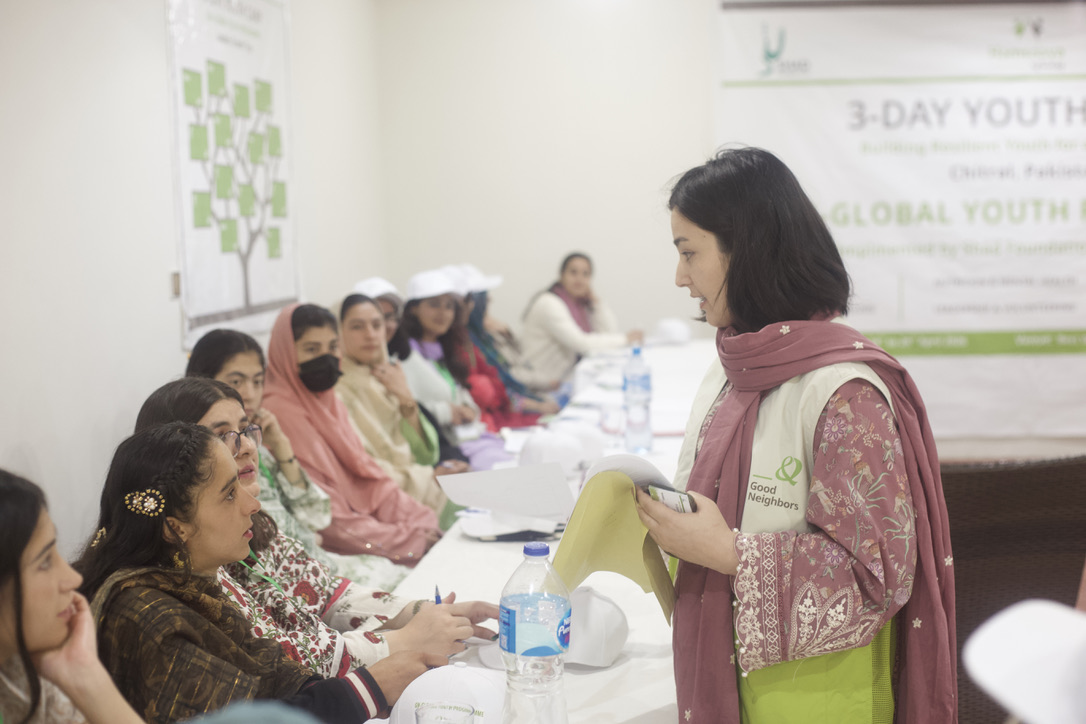
Day two of the three-day camp: mental health, nutrition, leadership and volunteerism.
The Camp
Three Days, Three Themes
Forty-seven participants attended — three could not travel after bad weather and damaged roads cut off their route. A detailed manual, written with an external consultant, guided every session, and pre- and post-assessments bracketed the three days so learning could be measured rather than assumed.
Knowing Myself and Shaping the Future
Self-assessment, goal setting and career counselling — identifying strengths and turning them into a written career plan.
Healthy Minds, Strong Leaders
Professional-led sessions on mental health and suicide prevention, nutrition, leadership and volunteerism, with group work and practical demonstrations.
Independent, Responsible, Climate-Smart
Entrepreneurship and business planning, plus a plantation activity and climate awareness walk to turn the discussion into something visible.
By the Numbers
Key Data
Participants by Age Band
Skills institutions mapped
Regional coordination groups
Elected cabinet roles
Career pathways mapped
After the Camp
Building Something That Stays
A camp that ends when everyone goes home is a weekend, not a program. The mid-year phase closed by putting structure underneath the fifty participants. Career planning templates sorted them into four pathways — employment, entrepreneurship, education and community engagement — so follow-up support could be tailored rather than generic, and three thematic groups were formed around business, employment and education to keep knowledge moving between them.
A mapping exercise across Upper and Lower Chitral identified seven public and private institutions offering everything from cooking and beautician training to web design, digital marketing and freelancing — a real list of places participants can actually go next.
Finally, participants elected a Youth Development Network cabinet — President, Vice President, General Secretary and Finance Secretary — working to finalised terms of reference, with six regional coordination groups spanning both halves of the district. Leadership and decision-making now sit with the participants themselves.
The post‑mid‑year phase turns to capacity-building courses, community development initiatives led by the Network, and the provision of business grants and scholarships.
More Case Studies
Have a Program You Want Delivered This Well?
Tell us about your program, and we'll help you plan, deliver, and sustain it — from the first needs assessment through to community handover.